Small puppy school classes Sunshine Coast provide a controlled environment where trainers can offer personalized attention and ensure safe socialization for every dog. These smaller groups prevent puppies from becoming overwhelmed; this allows for more effective learning and better long-term behavioral results.
Bringing a new puppy home to the Sunshine Coast is a joy, yet many owners quickly find themselves overwhelmed by the chaotic environment of traditional, large scale training classes. When your puppy is just one of a dozen dogs vying for attention, it is nearly impossible to address specific behavioral nuances or ensure a positive learning experience. These early developmental stages are far too important to leave to chance; the quality of your dog's initial education dictates their confidence and temperament for years to come. In this article, we examine why smaller class sizes are becoming the preferred choice for discerning local families. You will discover how intimate groups allow for personalized instruction tailored to your puppy's unique breed, the benefits of controlled socialization over sheer numbers, and how to identify a high quality program that prepares your dog for a lifetime of coastal living.
The Rise of Small Puppy School Classes Sunshine Coast Dog Owners Prefer
Welcoming a new puppy into your home is a milestone often filled with visions of relaxed walks along Mooloolaba Beach or weekend coffees at a local Maroochydore cafe. However, the reality of early training can quickly become overwhelming. Many Sunshine Coast residents find themselves in large, big-box pet store classes where ten or twelve puppies are crammed into a small space. This environment often results in sensory overload, where barking and chaos drown out the instructor's advice, making it nearly impossible for a young dog to focus or learn effectively.
Local dog owners are increasingly moving away from these high-volume settings. The growing popularity of the search for "small puppy school classes Sunshine Coast" reflects a shift in priority toward quality over quantity. Owners are realizing that a puppy’s first few weeks of learning are too critical to be spent in a disorganized free for all where bad behaviors are easily rehearsed.
Puppy School Sunshine Coast was established to provide a more effective, professional alternative. Our structured four-week program offers an intimate environment designed specifically for the local lifestyle. By limiting class sizes, we ensure that the training experience remains calm and focused on the developmental needs of each individual puppy, setting the foundation for a well-adjusted adult dog ready for life in Queensland.
What Defines a Small Group for Puppy Training?
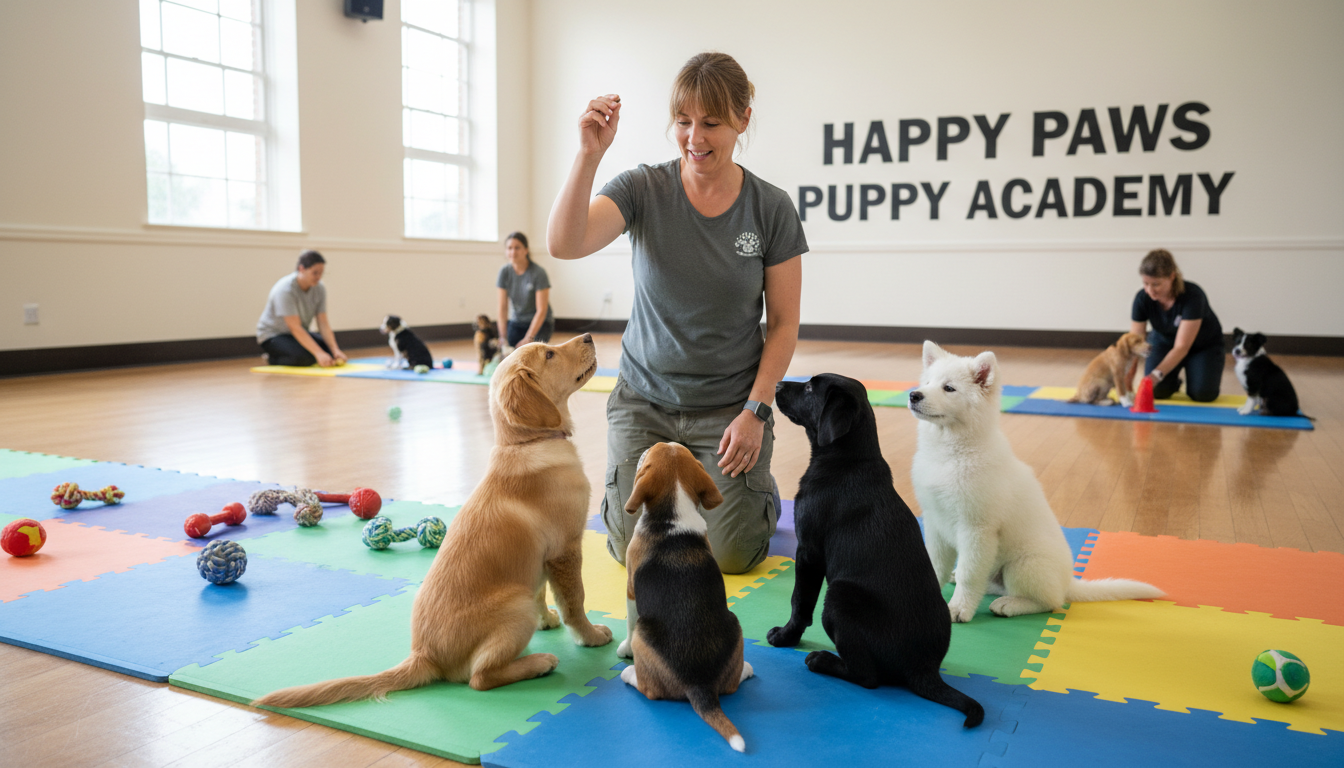
Defining a "small group" is about more than just a headcount; it is based on industry safety standards that prioritize a puppy's behavioral welfare. Leading organizations like the Delta Institute recommend a maximum of four puppies for a baby puppy class, stretching to six only if the space is ample and the trainer is highly experienced. This range is the sweet spot where learning occurs without the interference of high-stress signals.
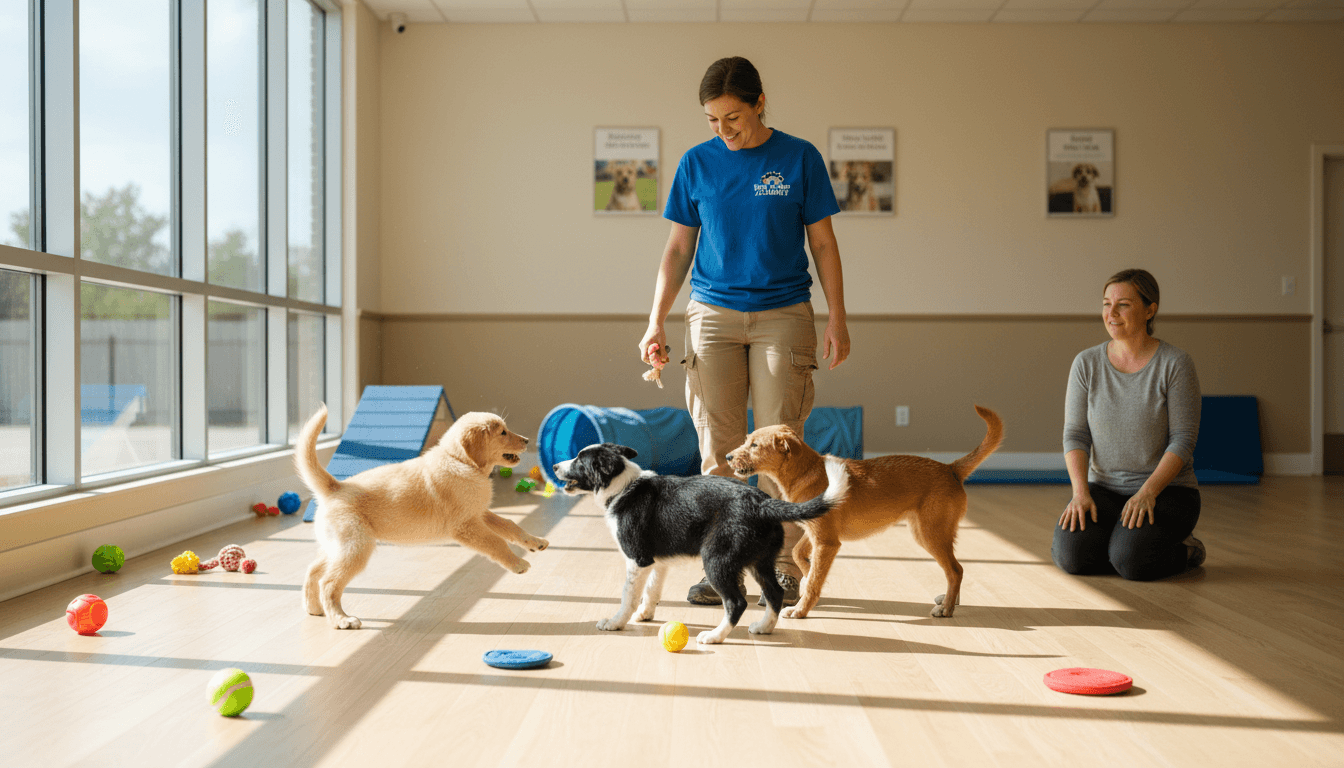
This controlled environment stands in stark contrast to the chaos often found in classes with 12 or more dogs. In large-scale settings, a single instructor cannot realistically monitor every micro-interaction occurring across the room. When groups are too large, subtle but critical body language is easily missed. A small class size of 4 to 6 puppies allows the trainer to observe every interaction in real time. This high level of supervision ensures that no puppy is being bullied and, just as importantly, that no puppy is rehearsing the behaviors of a bully.
Puppy School Sunshine Coast adheres to these intimate ratios across all of our locations to ensure every participant receives professional oversight. Our four-week program is built on the principle that a calm, quiet atmosphere is the only way to facilitate true focus. By limiting the number of participants, we can provide the individual coaching necessary to navigate the critical socialization period safely. In these smaller settings, trainers can step in immediately if a puppy feels overwhelmed, turning a potentially stressful moment into a successful learning experience that larger classes simply cannot offer.
Individual Attention: Tailoring Training to Your Puppy's Breed and Temperament
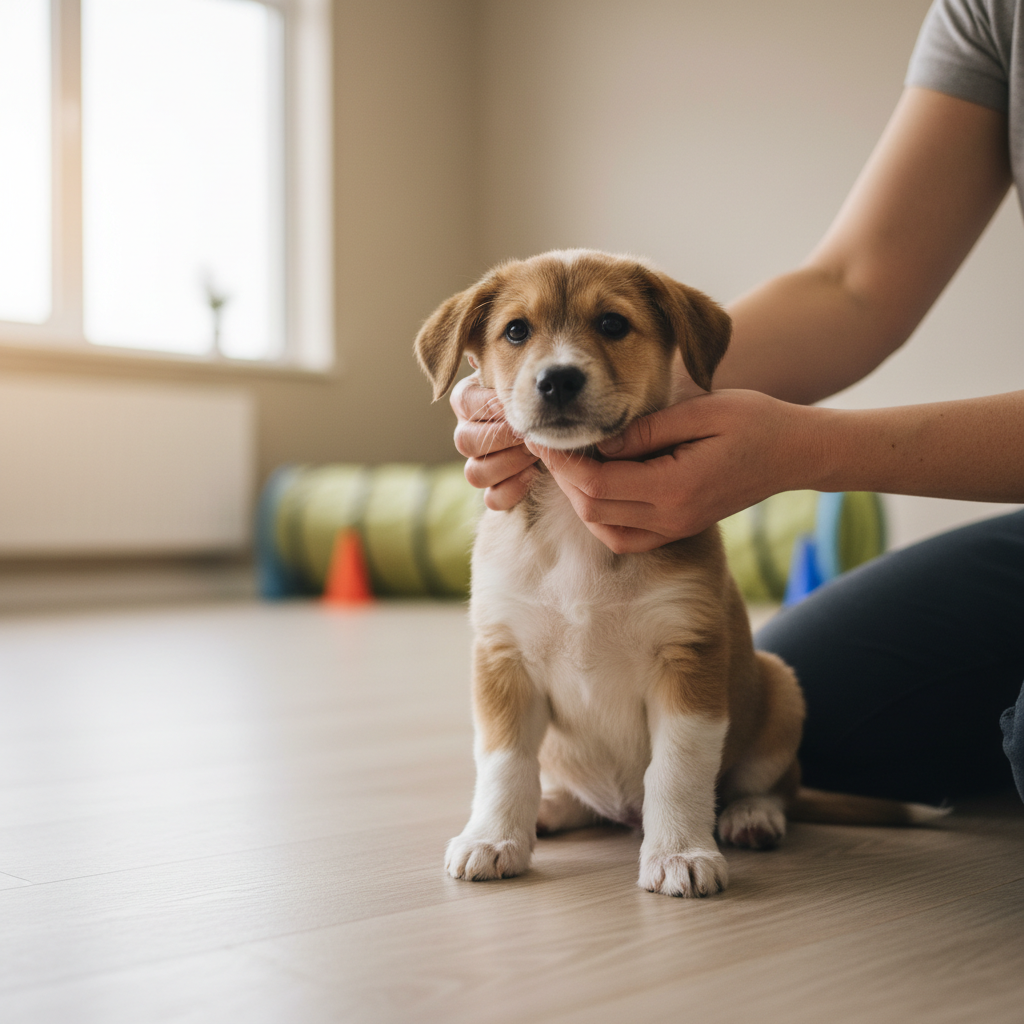
The primary purpose of individual attention is to move beyond a generic training script. In high volume settings, trainers often deliver a one size fits all lesson plan because the sheer number of participants prevents them from observing the nuances of each dog. When you choose small puppy school classes Sunshine Coast residents prefer, you ensure that the instruction is adapted to your puppy’s specific breed traits and personality rather than a rigid syllabus.
Every breed arrives with a unique set of instincts and developmental needs. For instance, a high drive Border Collie may struggle with overstimulation in a room full of movement and requires specific strategies to lower their arousal levels. Conversely, a Cavalier King Charles Spaniel might feel shy or hesitant, needing a slower approach to build confidence. In our four-week program, we recognize these differences immediately. A hunting breed, naturally inclined to follow scents, will require a different focus for recall training compared to a companion breed that is naturally more oriented toward their owner.
This level of observation allows Puppy School Sunshine Coast to identify subtle body language cues that often go unnoticed in larger groups. These are the details that affect long term results. A trainer in a small group can spot a puppy licking their lips, pinned back ears, or "whale eye," where the whites of the eyes are visible. These are clear indicators of stress or discomfort. By catching these signals early, we can adjust the exercise or the puppy's environment before the stress escalates into a negative association. Small classes provide the necessary space for a trainer to coach you on how to read your own dog, ensuring that your training sessions at home are as informed and effective as your time in class.
Controlled Socialization: Why Quality Over Quantity Matters
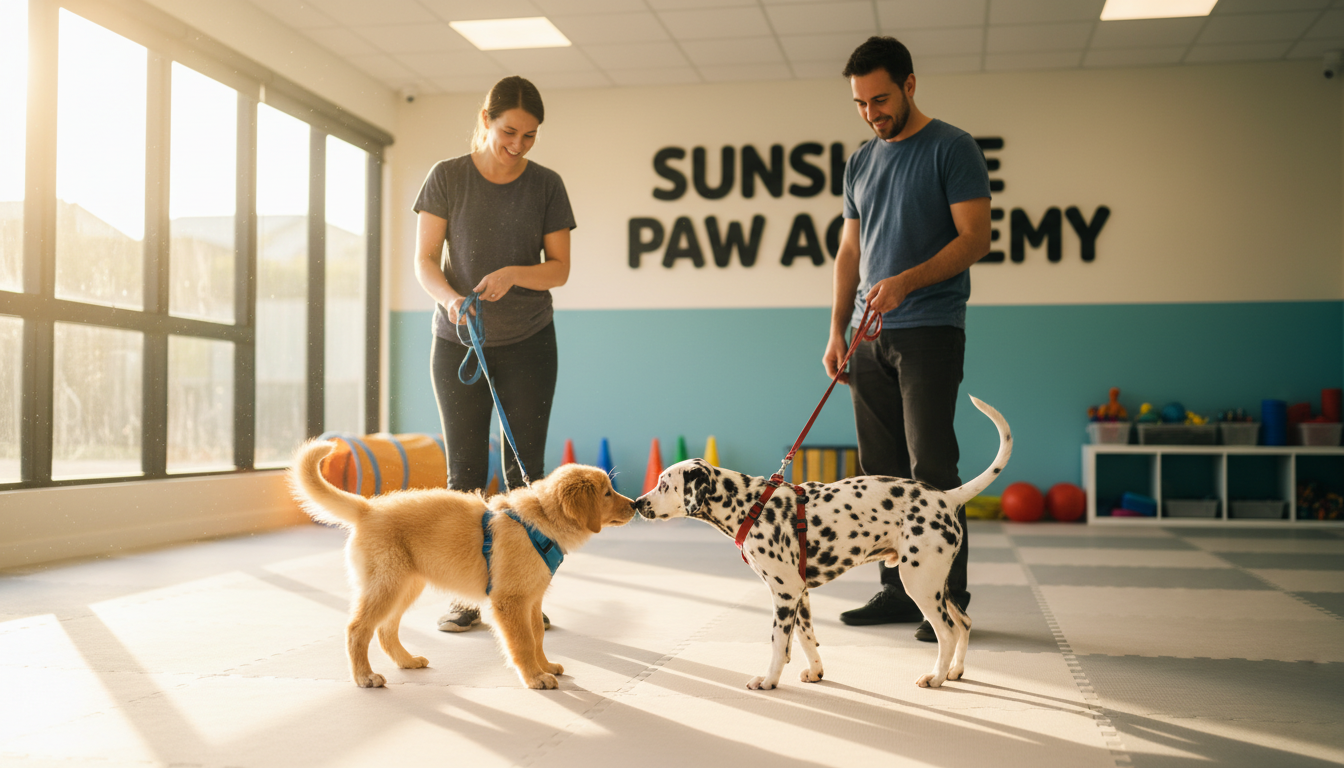
A common misconception among new owners is that socialization is a numbers game; the more dogs a puppy meets, the better. In reality, socialization is about the quality of the interaction, not the quantity of participants. When owners seek out small puppy school classes Sunshine Coast residents trust, they are often looking for a structured alternative to the free for all play sessions common in high-volume environments. Professional bodies like the Delta Institute caution against these uncontrolled interactions, as they frequently lead to puppies rehearsing inappropriate behaviors or developing lifelong fears after being overwhelmed by a more assertive peer.
The true goal of a four-week program is safe, controlled social exposure. This means teaching your puppy how to exist calmly in the presence of other dogs without the expectation of immediate play. In a small group, we focus on helping the puppy remain neutral and attentive to you. If a puppy views every other dog as a playmate, they will struggle to focus when you are trying to walk past a distraction at the beach or sit at a local cafe later in life.
At Puppy School Sunshine Coast, we prioritize parallel learning where puppies work on their own mats. This setup ensures they learn to settle and look to their owner for guidance while other dogs are nearby. By avoiding the chaos of a dozen puppies tumbling together, we create an environment where socialization means building confidence and focus. This approach ensures your dog grows into a composed companion who can handle the diverse social settings of the Sunshine Coast with ease.
Lowering Stress Levels for Both Puppies and Owners
A puppy's ability to learn is directly tied to their emotional state. In large, high-density environments, the sheer volume of sensory input, such as the constant barking of ten other dogs or the frantic movement of multiple owners, can lead to immediate sensory overload. When a puppy is overwhelmed by these sights, smells, and sounds, their brain often switches from a learning state to a survival state. By choosing small puppy school classes Sunshine Coast owners can ensure their dog remains in a psychological "green zone" where they are relaxed and comfortable enough to actually process and retain new information.
This calm environment is just as vital for the person at the other end of the leash. Learning how to properly time a reward or manage leash tension requires concentration and fine motor skills. In a crowded room, your focus is often split between the instructor's advice and the physical worry of your puppy being trampled or harassed by an unruly neighbor. At Puppy School Sunshine Coast, our four-week program is designed to remove that anxiety. We believe training should reflect the laid-back, outdoor lifestyle of the Sunshine Coast. By keeping groups intimate, we create a sanctuary of calm energy. This allows you to master the mechanics of dog handling in a space that feels like a supportive workshop rather than a chaotic crowd, ensuring both you and your puppy leave each session feeling confident rather than drained.
Preparing for Sunshine Coast Life: Beyond the Training Room
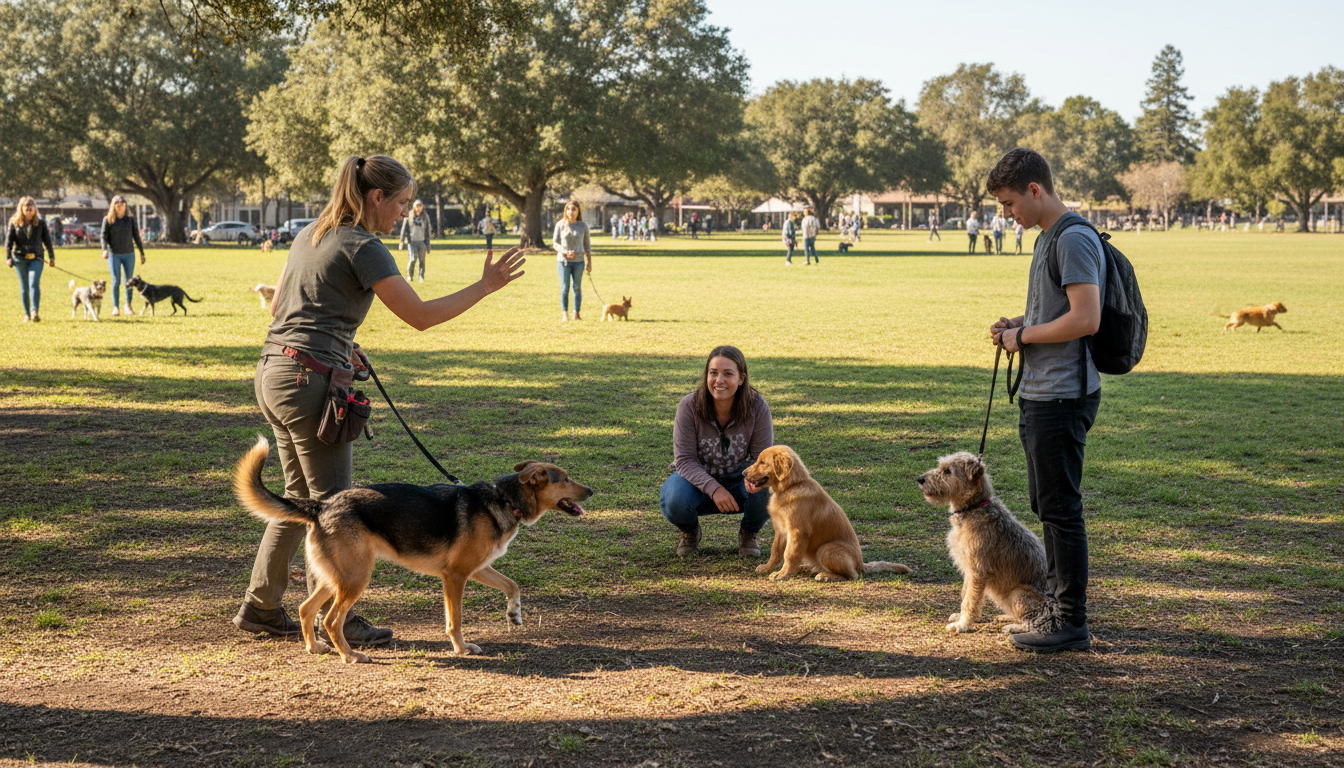
Maintaining that psychological green zone in a controlled environment is the first step toward successfully navigating the vibrant outdoor lifestyle of our region. The Sunshine Coast is famous for its outdoor culture, but a morning stroll along the Noosa River or a Saturday visit to a busy park in Caloundra can be intensely overstimulating for a young dog. By enrolling in the small puppy school classes Sunshine Coast dog owners trust, you are building the essential focus foundation required to navigate these high-distraction environments safely.
Imagine trying to enjoy a coffee at a Maroochydore cafe while your puppy lunges at every passerby or barks at the movement of surfboards. In our four-week program, we focus on teaching your puppy that you are the most interesting thing in their environment, even when other dogs are nearby. A chaotic, large-group class often teaches a puppy to either shut down or become hyper-reactive to other dogs because they never learned how to filter out environmental noise.
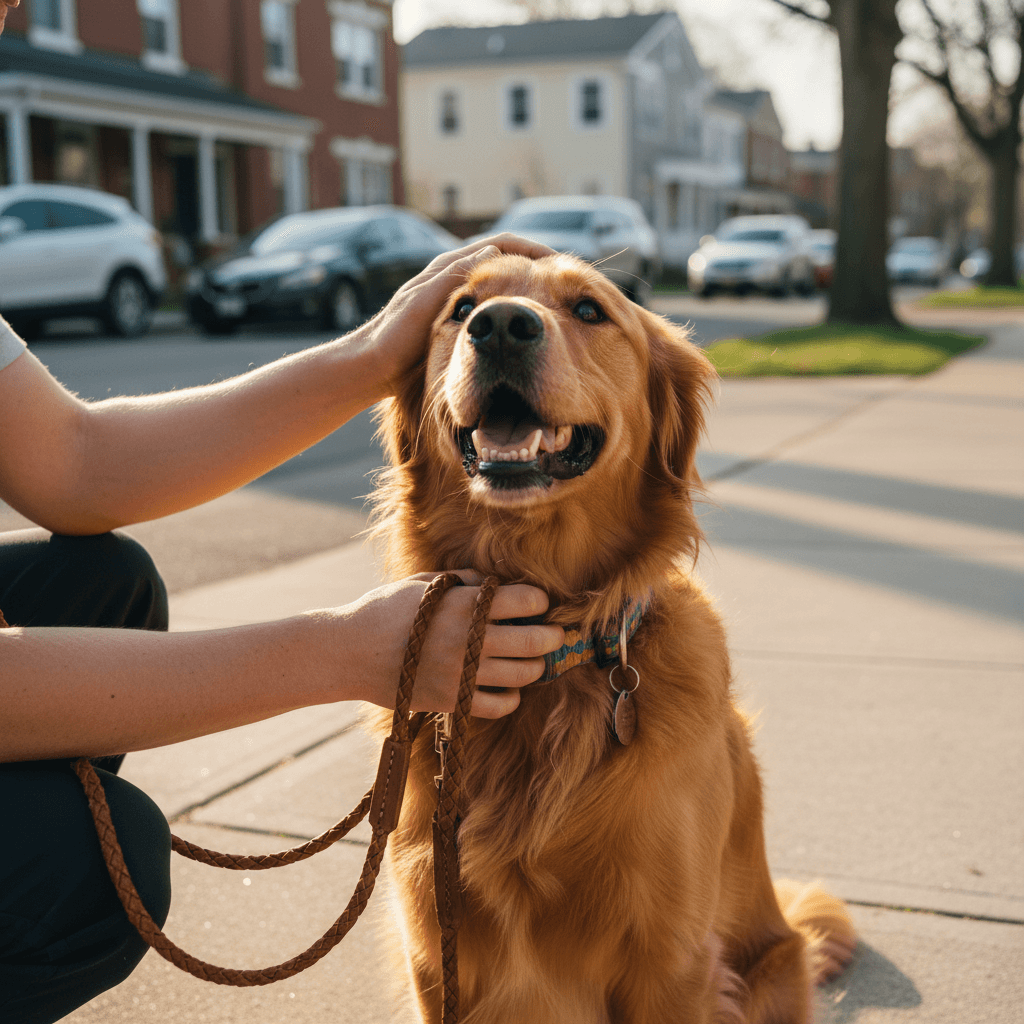
In contrast, the intimate setting at Puppy School Sunshine Coast allows us to gradually introduce distractions at a pace your puppy can handle. We prioritize skills that have immediate practical value, such as maintaining a loose lead while walking past a cyclist or remaining calm when a stranger asks to pat them. This methodology ensures that the settle command practiced on a training mat translates effectively to the paved walkways of Mooloolaba or the busy picnic spots of Kings Beach, turning your puppy into a welcome, well-behaved addition to the local community.
How to Identify a High Quality Small Puppy Class
Selecting the right environment for your dog requires looking beyond the price tag or proximity to your house. When researching small puppy school classes Sunshine Coast residents should look for clear indicators of professional standards and behavioral safety. A high quality program will prioritize your puppy’s emotional welfare over high enrollment numbers. Use the following checklist when interviewing potential schools to ensure they provide the structured support your puppy needs:
What is the maximum number of puppies per class? Industry standards, such as those from the Delta Institute, recommend four to six puppies. If a school allows twelve or more, it is a high volume environment where individual coaching is impossible.
Is there a structured [four-week program](/puppy-school-program)? A set curriculum ensures your puppy masters foundational focus before moving to complex tasks; avoiding a random, "drop-in" style approach.
How are social interactions managed? Avoid programs that allow "free for all" play sessions. A professional school uses controlled exposure and keeps dogs on mats to build confidence without the risk of bullying or overstimulation.
Are the exercises practical for daily life? The curriculum should focus on real world skills, such as settling calmly at a cafe or walking past distractions, rather than just competition style obedience.
Puppy School Sunshine Coast maintains these intimate ratios to guarantee that every owner receives the direct, expert feedback required to raise a well adjusted companion. By asking these questions, you ensure your training investment translates into a dog that is a joy to take anywhere on the Coast.